

The University of Texas at Austin Athletics

What has been your basketball upbringing and your journey to becoming the Head Coach at The University of Texas?
I always loved basketball. The game probably wasn't my best sport growing up. I was probably a much better baseball player, but basketball was my passion. I played two years in junior college, but it was there that I figured out really quickly that this might be an avenue for me to make a living in. My first coaching job was coaching freshman boys at a High School in Houston. After two years I went to Sam Houston State as a men's assistant coach, went back to my old job as a freshman coach, and then in 1990 was offered the women's head coaching job at Sam Houston State. I've been coaching 30 years and in my 38 seasons, 33 of those have been in the women's game. I feel blessed and fortunate to have had the longevity and the success I've had. I've worked at Arkansas, A&M, New Mexico State and then had a great opportunity at Mississippi State. Then, I had the best opportunity, and that's to come to The University of Texas.
How have you seen the University of Texas and Longhorn Athletics grow during your time in Austin?
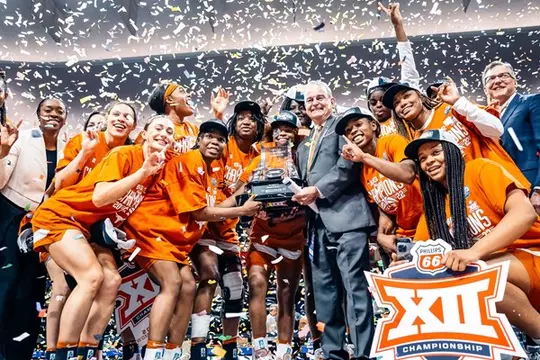
The two years I've been here have been nothing but winning in every sport. It’s been a real honor to work alongside the other coaches here at Texas. We've been fortunate to be in back-to-back Elite Eights and be ranked No. 5 in the country this year, but here at the University of Texas that puts you just in the top half of our teams. It's really humbling and I'm very honored to have the opportunity to be here. I think I have the best Women's Basketball job in America. There's a little bit of weight to bear here, but we bear it with honor and we're excited about the potential of our program for years to come.
How important are donors and supporters to the success of the Women’s Basketball program?
We highly value the donors' support both in the stands as well as their financial contributions. Within Texas Athletics, everything we spend and do has nothing to do with what the state gives us. It comes down to our donors or what we're able to make at the turnstiles; it's so critical. Let’s face it, we can't have our athletic program here in Texas without the donor’s love and support of our program. Because of my past experience, I have a real appreciation and understanding of what it means to have a loyal support system. We appreciate our donors and all the fans that love and support our program.
What do you hope to instill in your players for life after basketball?
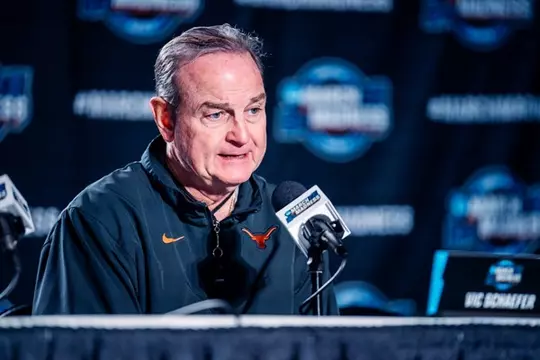
It’s hard to win unless you're consistent and have a competitive spirit. In the world today, I think those two traits are really important to survive and to be successful. Discipline is always a part of any aspect of life; good or bad. The one thing that is always apparent, whether you show up or not every day, is discipline. You either show up and do the work or you don't. We try to instill in our kids a work ethic, a competitive spirit, and a consistency that will allow them to be successful once the ball stops bouncing. Those same traits are what's going to allow us to be successful on the basketball court.
Can you speak to the importance of Title IX as a longtime Women’s coach?
I've experienced driving the team, getting out, coaching the game, getting back in the van, and driving home while the men were on a charter bus spending the night. Title IX has afforded so many opportunities for our young ladies. Me being a coach in Women's basketball, I'm very grateful for Title IX and what it's been able to do and how it's been able to positively affect so many young women in sports. It's meant a lot to our world and to our game. I feel very blessed to be at a place where all of our women's sports are treated with the utmost importance and respect that they very much deserve. One of the many things you can say about Texas is that it's kind of always been that way.
We try to instill in our kids a work ethic, a competitive spirit, and a consistency that will allow them to be successful once the ball stops bouncing.
How has NIL changed college athletics in your perspective?
I'm all for our student athletes being able to be compensated for their name, image and likeness; it's part of our world now. We have some special things here at Texas that will be beneficial for student athletes navigating NIL. Athletes here have an advantage to be at a place like Texas and to be in a city like Austin that not everybody else has. I believe NIL will teach them valuable business skills, like how to manage money and time. It's also going to teach them to be able to navigate relationships within a team and to be a cohesive one. NIL is here to stay and we're going to have to navigate that as a program, as a university, and me as a coach.
Tell us about the new Moody Center and training facility and what it will do for you and your team.
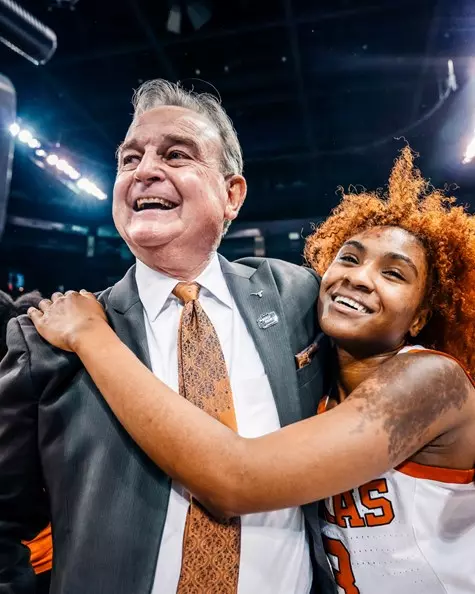
I’ve been to many facilities across the country, but I’ve never seen an arena quite like Moody Center. This space is special, and the new training facility will be a tremendous help in the recruiting game. Now I’m anxious to see the crowds we pull into the new arena. As special as the building is, what's going to make that a great home court advantage is the people that we put in it. It's a beautiful facility, no question, but it's only going to be a home court advantage if we can put 10,000 fans in there every night. Our team is excited to put on a show every time we step on to that court.
