The University of Texas at Austin Athletics
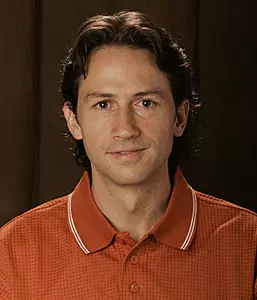
Q&A with Steve Sisson
08.23.2006 | XC: Women_Old, Track & Field / Cross Country
Former University of Texas All-America track and field distance standout Steve Sisson has had a few days to get organized in his new position back at his alma mater. Steve is the newest member of Longhorns' coaching staff as assistant women's track and field and cross country coach.
Prior to welcoming his cross country athletes to campus this weekend, the Texas ex sat down with TexasSports.com for a Q&A about the Longhorns and the upcoming season. In addition, Sisson provides insight into his coaching style and philosophy and answers questions about the great running/track and field culture here at UT and in the Austin community -- a culture he has been invested in since his days as a Longhorns runner.
First, welcome back to UT, Coach! Are you excited to begin your first year coaching with the Longhorns? Thanks for the welcome! It goes without saying that I am thrilled to be back coaching at Texas. Last year, I served as a volunteer with Bev (Kearney), and I am anxious to get started in my new position. It's an unbelievable opportunity and I'm honored to be in the position.
We're in a challenging year because I'm coming in to work with student-athletes that I didn't recruit, but who have amazing talent. The core athletes for our distance program are here; they are excited, rejuvenated and ready to step to the next level. The groundwork has been laid. Now, I have the opportunity to bring my passion to our distance program. The performances will come!
What will you focus on in terms of elevating the level of distance running for Coach Bev Kearney's Longhorns program? There is a strong history of distance running here at UT. Before Bev was hired as head coach, Terry Crawford was here, and she spent her scholarships the same way Bev does -- bringing in blue chippers. Bev's focus has been on the sprints, hurdles and jumps and bringing in the best athletes possible because, during her career, that's where she is most effective.
That said, I know Bev recognizes the distance running history at Texas and the unbelievable athletes in those events. Now, she's ready to bring it back. By bringing me in to coach, Bev is letting everyone know that we want that wider range, a broad-base of performers across all events, for the long-term viability of the program.
How do these plans fit in to the grand scheme that Bev Kearney has in place? We are looking to bring in national-caliber distance runners. I've got some time to build that part of the program. Right now, we have a core of returnees that I am counting on to be the foundation of things this fall.
Distance running is definitely a different culture, and it can get to the point where it's pulled off to the side and in its own world. We are going to be part of a tight unit -- a part of the overall track and field team, but the difference is that we just have an extra season to perform each fall.
From a recruiting standpoint, it's going to make my job a lot easier knowing that we are all on the same page of attracting the best distance runners possible to Texas. The level has to rise. A team feeds off that balance between distance runners, field performers and sprinters.
You mentioned having that extra season to work with the distance program (during cross country season). How will you use that time with the group? Developing a culture is about creating a bond, creating a commitment. Those are easy words to give lip service to, but hard to execute. Execution will come when you have solid leadership. Once we have leaders and our seven runners in our lineup, that nucleus is built. The coaches who came before me laid a great groundwork.
Bev has done a lot of work, and Rose (assistant coach Rose Brimmer) has done a lot of recruiting. Now it is time for me to put it all together from the distance end. When all of this is put together, it will be an unbelievable rise from where the program is now.
Who comes into the 2006 cross country season with experience and solid positions in the lineup? It's hard to say right now. We can start with our veterans, the twins -- seniors Landra and Lige Anna Stewardson -- who have been leaders on the team. They came in as sophomore transfers from Texas A&M, and have been silent leaders and the glue on the team. They've been through some struggles and hard times, but this year they should be focused on running.
We have Arianna McKinney, a sophomore. She was born to be an athlete and a champion! Arianna was a very highly- recruited athlete. For sure by track season, I expect her to make an immediate impact on the conference level. Betsey Jimenez is a blue chip recruit who we expect will have an impact at the Big 12 level, as well.
Turning to your schedule, which early meet should give you a good idea on who you expect to run in your top seven for the conference and regional meets? Honestly, since I was hired in August, I have not had the summer to work with this group the way I would have wanted. The coaches and student-athletes we will be competing against have had the ability to build a base (that I have not). I believe our student-athletes have worked hard this summer but it's going to take some time to learn the new book -- my way, so to speak.
So, we're going combat that by racing a lot. My belief is that you put your spikes on, pin a number to your chest, and race. Sitting at home, doing your workouts will not get it done.
When we race, we will race hard. I don't know how it's going to shake out. My number one runner may be my number five runner by the end of the season, and vice versa. It will be an interesting team. By the Chili Pepper Invitational (Oct. 14 in Fayetteville, Ark.), we'll know where we should be.
I'm not going to make any predictions because it wouldn't be fair. It's a great situation though, because it gives me a wonderful blank slate to work with for the upcoming season.
There is a huge running community in Austin, a community which is nationally recognized. This is a community you have been involved in since your days as a UT student-athlete. How will you continue that relationship now that you are switching to the college coaching scene? I think having the Austin running community involved is an essential part of being successful. My attitude is that at this point in our renewed focus on the distances, but it is essential to try to create fans out of Austin's already vibrant running scene. We live in a small city that has a strong distance running base and we're fortunate that most are Longhorn fans!
They get up in the morning, go to Town Lake and run the four-mile loop. They race in everything from 5K's to marathons. They also go to football games, soccer games, basketball games -- any UT sporting events. That doesn't happen in Lawrence, Kansas or Norman, Oklahoma, so we have an unusual culture in Austin that we need to embrace. I've been tapped into this culture for a long time. It is important to reach out to the community and encourage them to be track and cross country fans, too.
What will be more important is having the resources available and the connection to the amateur and high school running scene. It will be vital to let the local high school coaches know that the there is a new coach here at Texas and a renewed commitment to the distance program.
I want to be here for the long haul. This is my alma mater, and I want to build something special with our distance runners, the same way that Bev and Rose have been so successful with the other members of our track and field team.
If the community cares about our student-athletes, the community relationship will make this program more viable and higher profile and more exciting. People in our community will then go and tell others about our UT program. It happens at Oregon, Stanford and Colorado -- those are the marquee cross country and distance programs. Texas will aspire to that level.