The University of Texas at Austin Athletics
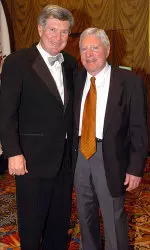
Legends and landmarks: Joe Jamail
07.27.2010 | Texas Athletics
July 27, 2010
Jason Womack, Texas Media Relations
The University of Texas at Austin has a long history of producing prominent and pivotal members of society, and the story of lawyer and philanthropist Joe Jamail certainly belongs in that history.
Like many current and former students of The University, the Houston native had a strong sense early on that his destination would be Austin, but thanks to a case of family tradition, Jamail had to settle for a slight detour on his way to the Forty Acres.
"My brother had gone to Texas A&M, so my family drove me on the Sunday after I graduated high school to start summer school at A&M," Jamail says. "I stayed one day, and then I just got out of there and hitch-hiked to Austin. I had heard about UT most of my life and had followed the football team, so I enrolled at UT."
The rest would be history for Jamail, The University and the court of law. Having taken and passed the Bar exam because of a friendly wager between classmates during his senior year, Jamail was already a lawyer before he received his degree from the school of law in 1953. He soon returned home to Houston to begin his legal career.
Shortly after arriving home, he settled on a job with the Houston district attorney's office. In 1955, Jamail partnered with high school friend George Cire to open his own law offices in Houston. That law office remains in business today.
"It makes me feel useful when I'm helping somebody," Jamail says. "It makes me feel good to know that I'm helping people who really need help."
Throughout his career, Jamail has served as lead attorney in several landmark cases for both family and corporate matters, and has been named "Trial Lawyer of the Century" by the California Trial Lawyers Association. Some of his most notable cases include successfully fighting for product liability, with some cases resulting in full product recalls, such as the prescription drug Parlodel.
The most famous of all cases for Jamail occurred in 1985 when he represented The Pennzoil Company in a contract dispute with The Texaco Company. On Nov. 19, the jury found in favor of Pennzoil for the amount of $10.5 billion, an amount which still ranks as the largest civil verdict in U.S. history.
"It was the biggest case in the history of the world," Jamail says. "Nobody thought I could win that lawsuit--nobody."
As a result of his success in the courtroom, Jamail has been blessed with a comfortable income, and he has given substantial donations to his community, The University of Texas and its athletic programs. Jamail's donations have included scholarship money for students, such as the Lee and Joe Jamail scholarship, and money given to the athletic department for facility expansions.
"I would not be able to make the kind of money I have made without my education from UT," Jamail says. "The University has been awful good to me, and this is my way of saying thank you for that."
In return for Jamail's generosity, The University has honored him on several occasions, including the designation of the Joseph D. Jamail Center for Legal Research located in Jessie Jones Hall, and a statue of his likeness located on the law school grounds.
The University's athletic department has honored Jamail for his contributions as well. In 1997, the department coincided its renaming of Darrell K Royal-Texas Memorial Stadium with its designation of the football field as Joe Jamail Field. The Lee and Joe Jamail Texas Swimming Center also stands as an honor to Jamail and his late wife.
In 2004, another statue of Jamail was unveiled by the south entrance of the stadium in position beside the statue of his longtime friend, Darrell Royal.
"I never dreamed anything like those things would happen to me," Jamail says. "I was overwhelmed, especially with the statue alongside Darrell's. That was particularly meaningful to me."
As is the case with his continued efforts in practicing law, Jamail remains persistent in his generosity to The University. He is also a lifetime trustee on the University of Texas Law School Foundation Board, and also sits on the board of visitors at the University of Texas M.D. Anderson Cancer Center in Houston.
And while he remains full of Longhorn pride, Jamail points out that his assistance in the endeavors of the athletic department has always been an effort to further the standing of The University and the interests of its alumni.
"Athletics is the window to our entire university. It's what brings the alumni back, and it's really the key to showing the world what we're about," Jamail says. "My interest is not just athletics, but I see athletics as a way to influence alumni to come back to Austin and see the progress that we've made in so many areas."