The University of Texas at Austin Athletics
Bill Little commentary: And the band played on
10.29.2013 | Football, Bill Little Commentary
The team, spirit groups and the band had just experienced something that they can tell their grandkids about.
It was the season of 1968, and Darrell Royal's Texas Longhorns were desperately trying to fight back against a Texas Tech Red Raider football team on a dreary September night in Lubbock.
Coming off a 6-4 season in 1967 and a season opening tie to Houston, the Longhorns were woefully short on crowd support. Travel to road football games was a bit rare at the time, particularly to a South Plains outpost like Lubbock.
As athletics director (and the guy in charge of funds for athletic events), Royal had chosen not to spend the money to take the Longhorn Band to the game. After returning to Austin following the Horns' 31-22 loss, he openly regretted that decision.
"I kind of like to hear 'Texas Fight' when we have a rally going," he said.
And then he met with his great friend, Longhorn Band Director Vince DiNino, and vowed never to travel without the band again.
Saturday night in Fort Worth, that mutual commitment was put to the test in a big way. The entire Longhorn band, 390 members strong, was on hand in Fort Worth for what was to have been a showcase halftime performance. They were even beginning to make their way toward the field when, with 6:08 remaining on the clock, the game was stopped due to lightning and the teams were sent to the locker rooms.
Band members scurried under the newly constructed stands at Amon Carter Stadium, finding what space they could in concourses and stairwells, as the storms came in. For over three hours, and without much information, they waited.
"They just hung out together," said Dr. Rob Carnochan, the band director.
The Longhorn football team was in the midst of its own waiting game. Having gone through a bad experience in Provo, Utah, when the Brigham Young game was delayed at the start, Mack Brown was determined to handle this one differently.
"We told the players to take off their pads, meet with their coaches, and do whatever would make them comfortable. Whatever they did at BYU, we told them to do something different," he said. Some players listened to music, others napped, others found ways to entertain themselves. Most of all, they continued that bond which has been evident in this team since the beginning of the season. Together, they determined, they would handle this.
Realizing that it had been a long time since the pre-game meal at 2:30, staff dietician Amy Culp, trainer Kenny Boyd and football strength and conditioning coach Bennie Wylie, began working their own version of the Biblical "loaves and fishes" story. They took the chicken from boxes which had been delivered to the dressing room for the postgame snack and divided it in half. The players needed "fuel," true enough -- but they wanted to make sure they didn't stuff themselves.
The coaches used the break as they would have used a half-time intermission. They could meet and talk about adjustments, but by rule they could not use television or any other photographic images to enhance their points.
Of all of the entities surrounding college football, perhaps the cheerleaders top the list of unique. Their shared interests in their trade actually brings them a bond and a friendship which often isn't found in other areas. While the team members were trying to keep themselves occupied and the band was trying to stay dry, the Texas Cheerleaders and Texas Pom had hooked up with their counterparts from TCU, who had taken the UT spirit groups into nearby Daniel Meyer Coliseum—where they actually posed for pictures doing double stunts together.
When the weather finally cleared after a more than three-hour delay, everyone got the word to return to the stadium. Not surprisingly in such a fluid, confusing situation, communication was excellent between the officials and the teams, but random in the other groups.
"There were a lot of rumors," recalled Carnochan, as to the form in which the game would continue. Eventually, the decision was to finish the final 6:08 of the second quarter, and then break for five minutes (with the teams remaining on the field) before starting the second half. That window was eventually shortened to just three minutes. At any rate, the halftime show the band had worked on so intently wasn't going to happen.
But when the Longhorns emerged from the locker room, the energy was obvious. Whatever had happened at BYU, it was clear this group was re-entering the arena with a purpose. And the band played "Texas Fight."
"There may not be anybody there," Brown had told his players. But happily, to his amazement, he was wrong. There in the stands was the Longhorn band, in full uniform and blasting away as the cheer and pom helped lead the team back on the field. Some Longhorn fans had even made their way to the general admission area behind the Texas bench, which had been vacated by TCU students.
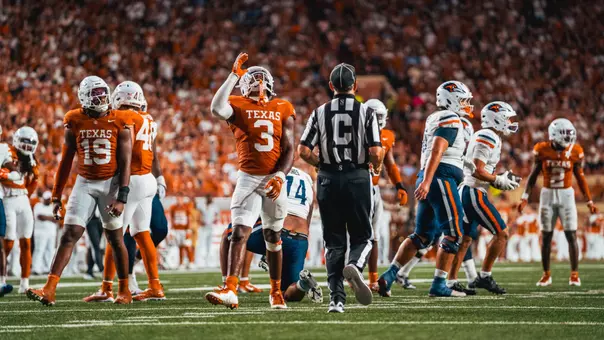
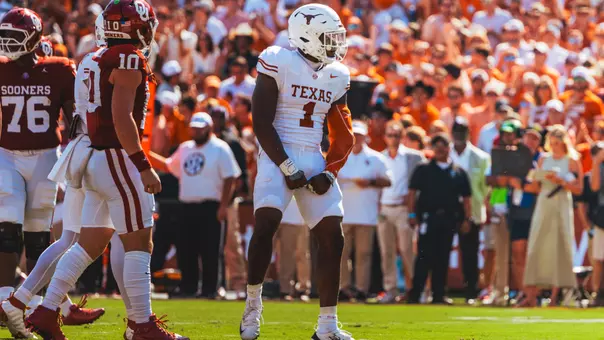
In one of the strangest football games a Texas team has ever played, the Longhorns won their fourth consecutive Big 12 game to remain atop the league standings. They did it with solid kicking from Anthony Fera (three field goals and a 40-yard punting average), a balanced offensive attack which continued to feature the run and some precision passes, and a stifling defense which has now allowed only two offensive touchdowns in its last two games against TCU and Oklahoma.
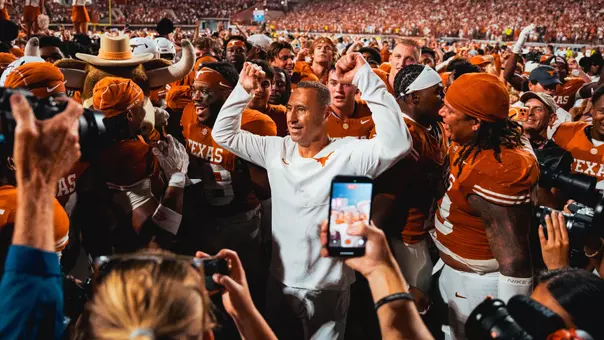
When the Horns closed out their 30-7 win and at some point well past midnight headed to the north end of the stadium to salute the band when it played "The Eyes of Texas," the game was over. The trip home would last another five or six hours for the band, while the team's flight home would land just a little past 4 o'clock.
On Monday, football equipment manager Chip Robertson was working on putting together a gift from Mack Brown and the team to the band and the spirit groups.
For everyone, it was a memory. The team, spirit groups and the band had just experienced something that they can tell their grandkids about.
Most of all, in an environment where far too many people are into the "I" factor, these young people proved the special importance of doing something together. You don't find that very often, in a society driven by the Balkanization of so many things.
But on that night in Fort Worth, and the morning which came quickly behind it, there was a capsule of a moment where being a college kid carried a camaraderie that too often is far, far away. It is a part of the college experience that is to be treasured, even if you are hungry and sleepy, on the long drive home.
Vince DiNino would remember why that all makes sense, and Darrell would be happy to pay that bill.