The University of Texas at Austin Athletics
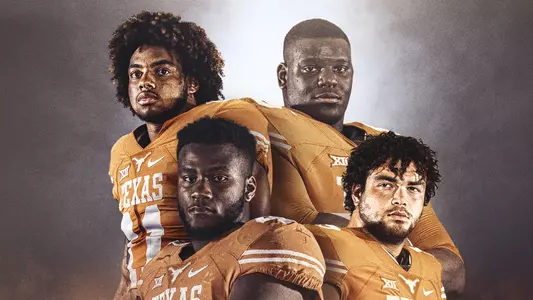
2017 captains earn respect through actions, words
09.01.2017 | Football
Football team captains talk about their new roles, leadership styles and their reactions to begin named captain
As fall camp neared its conclusion, one thing had become clear: during an offseason in which praise from head coach Tom Herman was at a premium, four players — juniors Connor Williams and P.J. Locke III, and seniors Naashon Hughes and Poona Ford — had earned some of the most consistent nods of approval from their new coach.
But winning over the coaching staff was just one step in becoming leaders on the team. The four players' selection this month as captains signaled another level of respect from their teammates, who ultimately cast the deciding votes. The new captains were revealed at a team meeting at the conclusion of fall camp.
"It was very humbling for my teammates to elect me and three others to represent our program and represent our efforts for the past nine, ten months," Williams said. "To understand that I have that respect from my teammates, it not only gives us further confirmation that we're doing the right thing and we need to lead, but it also puts a lot of pressure that we're representing our teammates, that we need to represent them well."
Now, as the coaches and players prepare for their first matchup of the season against Maryland on Saturday, the new captains are charged with helping guide the team through the culture shift that began in the winter, when Herman and company first arrived. In keeping with the coaching staff's emphasis on accountability, each of the captains cited "paying attention to detail" as one of the key responsibilities of their new roles.
"It's just basically making sure the team as a unit is on point at all times," Hughes said. "There's no distractions or anything like that. Making sure we're focused each and every week going into the game."
For Locke, a third-year defensive back, being named captain fulfilled a dream he had harbored long before he stepped on campus.
"Words can't even explain how I feel about it," Locke said. "It's something I've been dreaming about since I was younger. At The University of Texas — that's the crazy thing about it."
Herman made headlines when he called Locke's parents earlier this offseason to thank them for raising their son. But when another Texas coach — offensive line coach Derek Warehime — made the call to Williams' mother to share the news that her son had been named captain, she feared the worst when her son struggled to get out the words over the phone.
"He gave me the phone and I couldn't even say anything at first," Williams said. "She thought I was injured. I couldn't spit out any words. I had to walk away for like thirty seconds. I finally spit it out, and I started bawling. I couldn't even say it."
Williams refers to the program as "coach-fed, player-led." The messages may originate from the coaches, but it's up to the players to hold each other to those standards.
"Whether it's in the locker room or anywhere, if you see something that's not part of our culture, whether you're a second-string, third-string guy on the scout team, you have a right to pick him up," Williams said. "And there better be guys around you backing you up because that's our culture and that's how we do things."
The role of captain marks a progression for Ford and Williams, both of whom were known to be quiet but hardworking on the field. Williams began to speak out more last year at the urging of his coaches, and Ford, according to his teammates, is doing the same this year. Ford in particular was known for saying little — "I've probably heard him say ten words," Herman said — but Herman was also quick to call him the hardest-working player in practice.
"It's an honor number one, but being a captain isn't easy," Ford said. "It's just great leadership. Knowing what to say in certain situations to keep your teammates upbeat. You don't want to see them down."
Locke said he, too, once preferred to let his performance on the field speak for itself. Despite playing in all 12 games last year and starting nine of them at nickelback, Locke said he didn't feel he'd done enough on the field to justify speaking up in practice.
"I talked when needed, but I always kind of led by example," Locke said.
That changed when the new coaching staff arrived. Locke said their emphasis on players holding each other accountable prompted him to find his own voice, and he soon emerged as one of the most prominent leaders during the offseason.
"This coaching staff came in — basically, they didn't care. You can be a freshman and lead this team," Locke said. "So that kind of opened my eyes. There were certain situations where you need to speak. It just started to become second nature, just started speaking out at any time."
Hughes, a fifth-year linebacker, is one of the most seasoned players on the roster. Now playing for his third head coach during his time on the Forty Acres, the veteran linebacker said his brand of leadership has evolved with experience.
"My leadership style is honestly just versatile," Hughes. "I don't mind yelling, I don't mind going after guys here and there. But also, understanding where guys are coming from and talking to them on a personal level. Just whatever needs to be done at the time, I don't mind doing it."
Three of the four captains are on defense — Williams, a left tackle, is the lone offensive player — which Hughes attributed to the level of leadership already present on the defensive side of the ball.
"I guess it's a show of how much we've been working this past summer," Hughes said. "Guys noticed that and they noticed the leadership qualities coming from playing defense. You have to have a certain level of leadership on defense just to be a great defender, period. With the three of us being named captain, I guess there are a lot of people starting to take notice of that."