The University of Texas at Austin Athletics
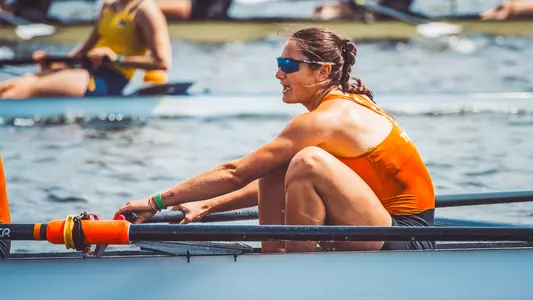
What it means to be a Longhorn: Gia Doonan
08.23.2023 | Rowing, T-Association
Doonan is one of 11 Longhorn greats selected for induction in the 2023 Class of the Texas Athletics Hall of Honor.
As told to Will Dehmel.
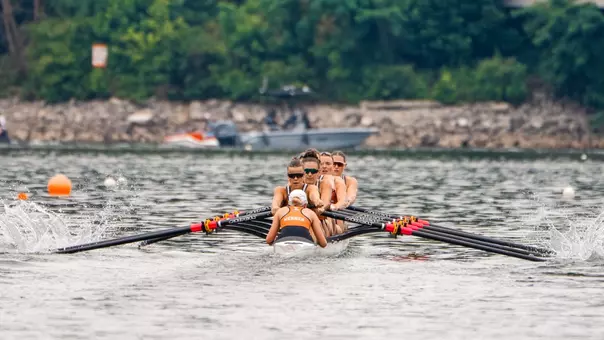
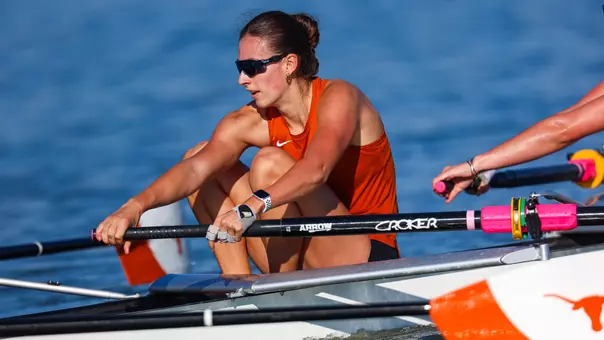
As surprising as it may seem, neither The University of Texas nor rowing were on my radar until freshman year of high school. While many Longhorns bleed Burnt Orange their whole life, my love came a little later. And it all happened because of rowing. Growing up in Rochester, Massachusetts, and attending Tabor Academy, I originally wasn't going to row at all. I was already busy enough competing in track and field and basketball, but my school advisor was the wife of the crew coach. She told me I was tall, and that the spring training trip was in Austin, Texas. Having never been to Austin, I was more excited for the destination than the actual activity. I fell in love with two things that spring: the city of Austin, and, of course, rowing.
During the training trip, my whole team toured the Texas campus. As it was my first college visit and the visit coincided with my falling in love with the sport and the water, Texas has always had a special place in my heart. Once I started looking at schools, I immediately contacted Texas to let them know I was interested. While I went on official visits to other schools, I noticed a recurring theme: I kept comparing them to Texas. Eventually, I realized that the comparison I kept making meant my choice was easy … I had to be a Longhorn.
While Texas Rowing is now known as a powerhouse, when I originally enrolled the team wasn't nationally ranked. Part of the reason I went to Texas was because I thought that a slightly less successful team would provide me with a perfect balance of school, social life, and rowing. I'm now so thankful I was wrong.
 In my first year at Texas, head coach Carie Graves and assistant coach Melissa Perone encouraged me to pursue a career past collegiate rowing. I had never even given that option a thought, and it certainly was going to take convincing. My sophomore year, Dave O'Neill came in as head coach, and although I had certainly worked hard in the past, he taught me what it was really like to work hard. That is when my career shifted to what it would become: I fell in love with working hard, competing, and winning. So did Texas Rowing.
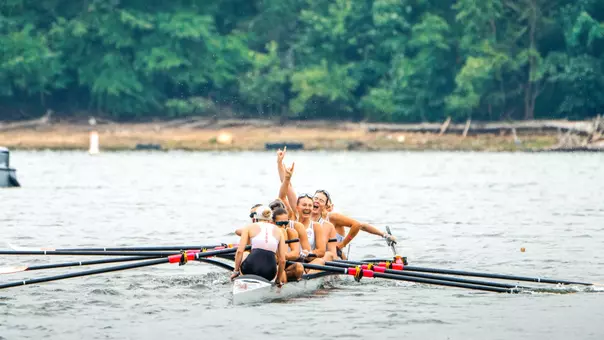
The beauty of Texas Rowing at the time was that it was an underdog. There were no expectations for us to perform well, yet we consistently did. As the team began to win more and more, we kept thinking, "Why not us?" If we shocked people once, why not do it 100 more times? Now, Texas Rowing doesn't surprise anyone when it wins. It's the expectation. We flipped it.
That was not, of course, by luck. Rowing is a grueling sport, and those who win do so through immense amounts of effort and training. The biggest winners enjoy the work. I remember one practice — it was a 5x1500 meters — and we were all dying. On the last piece, when we barely had anything left, we all looked around and remembered what we were building here in Austin. We linked eyes and screamed, "Yeah Texas, let's do this." It's a moment I won't forget, and it's the culture that has remained at Texas.
 When I went on to compete for the USRowing National Team in world championships and the Tokyo 2020 Olympic Games, I used the underdog mentality I had cultivated at Texas. Throughout my career, I had experienced back problems, but none more troubling than five weeks before Olympic selection. I herniated a disc and was sent home from the most important winter camp of my career. I spent two weeks in bed, one walking on a treadmill, one rowing on a pair with a back brace, one to actually prepare, and then it was Olympic selection time. I was fortunate to compete well enough to make the team, and the rest is history. It wasn't until I visited the White House with the 2020 and 2022 Team USA Olympians for a week that I realized I was no longer an underdog. I remember being astonished at the thought of how good everyone was at what they do, and then a thought struck me – "Holy cow, I'm here. I must be really good at what I do."
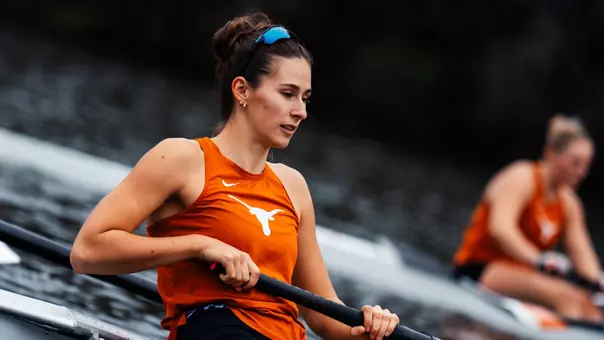
 The rest of my career has been on the other side of things, as a coach. I volunteer coached with the Longhorns the year after Tokyo when I was deciding whether to keep training or not, and I realized that I loved rowing not just as an athlete. I loved the sport, I loved people working hard, and I loved coaching. Mentoring 18-, 19-, and 20-year-olds — remembering I once was that age — is so rewarding. I try to take what I learned and thought about when I was their age to become a better coach and foster Texas culture to the new members that come through every year.
To me, being a Longhorn means to be part of something so much bigger than yourself. Every single Longhorn — whether involved with academics, athletics, communications, etc. — holds themselves to such a high standard, and I'm so proud to be associated with people like that. Thinking about what it means to be in the Hall of Honor, I really am speechless. In rowing, you're doing something wrong if you're standing out as an individual. I got here because I was a good teammate and boat partner, and I'm so grateful for all the people who helped get me here and keep me here. I have no plans to leave Texas anytime soon, and I'll be a proud Longhorn for life. Hook 'Em, Horns!